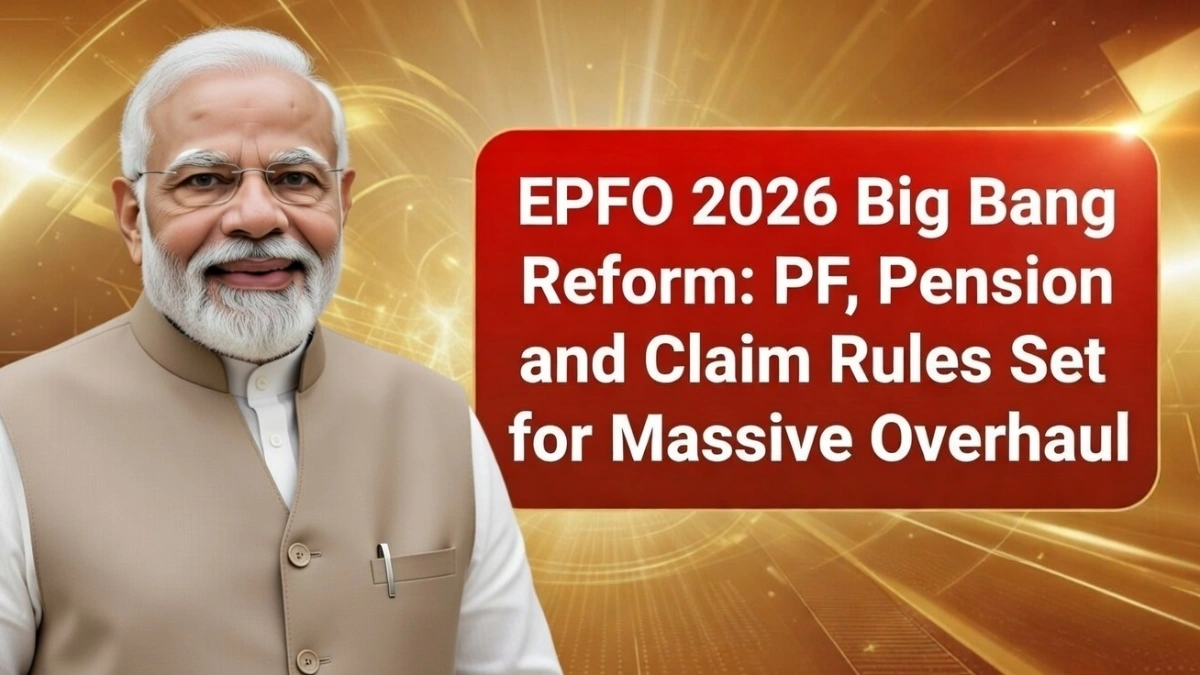
The year 2026 is turning into a crucial phase for salaried employees as major updates under the Employees’ Provident Fund system begin to take shape. From potential changes in Provident Fund contribution structures to faster claim settlements and pension reforms, the latest developments are being closely watched by millions.
The reforms are linked to the functioning of the Employees’ Provident Fund Organisation, which oversees retirement savings, pension benefits, and claim processing for private sector employees across India. Any regulatory shift directly affects long term financial planning for working professionals and retirees.
Why EPFO Rules 2026 Matter More Than Ever
With rising inflation and evolving employment trends, the need for streamlined retirement systems has grown significantly. Employees are demanding faster access to funds, higher pension adequacy, and better digital services. In response, EPFO has accelerated modernization efforts and policy reviews in 2026.
The focus areas include wage ceiling discussions, improved pension framework under the Employees’ Pension Scheme, and digital automation of claim processes. These reforms aim to balance employee welfare with fund sustainability.
Major PF Contribution and Wage Ceiling Discussions
One of the most debated aspects in 2026 is the wage ceiling for EPF contributions. If revised upward, more employees may fall under mandatory coverage, and contribution amounts could increase.
A higher wage ceiling may result in:
Higher monthly EPF deductions
Increased employer contributions
Larger retirement corpus over time
However, it also means slightly lower take home salary in the short term due to higher deductions. Employees must evaluate long term benefits against immediate cash flow adjustments.
Pension Reforms and Minimum Pension Debate
Pension adequacy remains a key concern. Discussions around revising the minimum pension threshold have intensified in 2026. Pensioners argue that current payouts do not match inflation levels. While no official confirmation has been issued, policymakers are reviewing financial viability and actuarial data to ensure that any hike remains sustainable. Reforms may also focus on simplifying higher pension options and clarifying eligibility conditions for retirees who contributed on higher wages.
Faster Claim Settlement and Digital Upgrades
EPFO has significantly invested in digital transformation. In 2026, claim processing is expected to become faster through automation and real time Aadhaar verification.
Members can file claims online for: Full settlement after job exit Partial withdrawal for medical or housing needs Pension disbursement requests Transfer of PF balance between employers Reduced manual intervention means fewer delays and quicker fund disbursal. Employees can now track claim status online without visiting EPFO offices.
Online KYC and Compliance Tightening
To reduce fraud and discrepancies, EPFO is emphasizing strict KYC compliance. Aadhaar, PAN, and bank account linkage are mandatory for seamless transactions. Incorrect details or mismatched records can result in claim rejection. Employees are advised to regularly verify their EPF passbook entries and update personal information promptly.
Employers are also expected to ensure timely contribution deposits and accurate payroll reporting.
Quick Overview of EPFO Reforms 2026
| Reform Area | What Is Changing in 2026 | Expected Impact |
|---|---|---|
| Wage Ceiling | Possible upward revision | Higher contributions and bigger retirement corpus |
| Pension Structure | Review of minimum pension demand | Potential relief for retirees |
| Claim Processing | Increased automation and faster approval | Reduced waiting time |
| Online Services | Enhanced digital portal features | Seamless filing and tracking |
| KYC Compliance | Stricter verification requirements | Fewer fraudulent claims |
Impact on Employees and Pensioners
For working professionals, the reforms mean improved efficiency and potentially higher long term savings. For pensioners, the focus remains on ensuring adequate monthly payouts and smoother disbursement. Employees switching jobs will benefit from simplified transfer processes, ensuring continuity in retirement savings accumulation.
Retirees, on the other hand, are hopeful that pension reforms may address long standing concerns regarding minimum payout levels.
Financial Planning Implications
These reforms underline the importance of proactive retirement planning. While EPF serves as a strong foundation, employees should consider diversified investments for balanced financial security. Regularly reviewing EPF statements, understanding contribution structures, and staying updated with official notifications will help individuals adapt effectively to new rules.
What Employees Should Do Now
Employees should verify their KYC details, ensure Aadhaar linkage, and check employer contribution consistency. Monitoring official announcements from EPFO will provide clarity on wage ceiling revisions and pension updates.
Being informed reduces the risk of claim rejection and ensures timely access to funds during emergencies.
Conclusion
EPFO New Rules 2026 mark a significant phase of reform in Provident Fund, pension, and claim processes. With digital upgrades, possible wage ceiling revisions, and ongoing pension discussions, the system is moving toward greater efficiency and transparency. While final policy decisions are awaited in certain areas, employees and pensioners should prepare for structural changes that could shape retirement planning in the coming years.
Staying updated and maintaining compliance will be key to maximizing benefits under the evolving EPFO framework.
Disclaimer: This article is based on current discussions and available updates. Final rules and reforms will depend on official EPFO notifications and government decisions.